
For as long as there have been chess computers, people have wanted to play a particular personality, not a calculating machine. With a data-analysis procedure developed for this purpose, a player's style can for the first time be measured and reconstructed from their own games: Tal sacrifices, Karpov squeezes, Capablanca simplifies, because their games say so.
In 1770 Wolfgang von Kempelen unveiled the Turk at the court in Vienna: a figure in Ottoman dress seated at a cabinet, moving the pieces with a mechanical arm. It toured Europe and America for decades and played, among many others, Napoleon and Benjamin Franklin. Its secret, a chess master hidden inside the cabinet, was kept for a remarkably long time. What drew the crowds was never that the machine was strong. It was that it seemed to think the way one of us thinks.
That fascination outlived the Turk by a long way. In 1948 Alan Turing wrote a chess program before there was a computer that could run it, and later played it out by hand, move by move. In 1997 Deep Blue beat the world champion. In 2017 a machine taught itself chess from the rules alone and overtook everything that had come before it. Today the strongest engines are far beyond any human. They also play like no one. Ask an engine to play like Capablanca and it does not know what you mean.
Show a strong player ten moves of a game and they will often tell you whose game it is: a Tal game, a Petrosian game. Ask what exactly gave it away and the answer trails off. Something about the initiative, something about the pawns, a feeling. Style is the thing chess players recognise most readily and define least well.
Earlier attempts to put style into a machine worked from the outside in. Give an engine a famous player's opening repertoire and it plays the first dozen moves in character, then turns back into an engine. Turn a dial towards attack and you get an attacker, not a particular one. Add random mistakes and you get a player who exists nowhere.
ChessGate works from the inside out. The style is not set, it is measured, position after position, across a whole career, and the player is reconstructed from that measurement. That is the breakthrough we spent years on.
ChessGate is made by DCS Analytics, a company that writes software for laboratories, and we had met this problem before, in another trade. In a laboratory, an instrument is never trusted on its own. It is calibrated against reference standards: samples whose values are known. You measure the standards, record how the instrument's readings relate to the known values, and from then on every reading of an unknown sample is interpreted through that calibration. The instrument supplies precision. The standards supply truth.
A modern chess engine is a near-perfect instrument: precise, tireless, impartial, and without any opinion about style. A grandmaster's games are reference material: thousands of positions in which the known value is the move the master actually played. Put the two together and you can do what a laboratory does every morning: measure the instrument against the standard, position after position, and record how the two relate. That relationship is the style. Something nobody could define turned out to be something you could measure, not in any single position but across thousands of them, with the engine holding the ruler.
This is why ChessGate is, before it is anything else, an applied data-analysis project. The chess knowledge comes from the engine and from the masters. The method for relating the two comes from the laboratory.
In 1890 the American census was counted on machines designed by Herman Hollerith. Every person became a card; every attribute, from age to occupation, became a hole punched in a fixed place. Sorting and counting machines then answered questions nobody had thought to ask when the cards were made, simply by reading the holes in new combinations. The company Hollerith founded became part of IBM.
We borrowed the idea. Chess has more positions than there are atoms in the universe, so asking whether Karpov ever saw this exact position is pointless; he almost never did. Instead we ask which characteristics the position has: the pawn structure, which pieces are active, where the kings stand, what each side is threatening, and the phase of the game. Every player has a card in Hollerith's spirit, with a mark for what they preferred at each combination of characteristics and phase. A position the player never saw still falls through holes that were punched by thousands of positions they did see.
Hollerith's machines answered questions nobody had asked when the cards were punched. Ours answer a question Karpov was never asked: what would you do here?
We are often asked what the formula is. The ingredients are no secret.
Our own engine reads the position and names the good moves.
A measurement, made for each player from their own games, of how the master's choices relate to the engine's.
What the player preferred at each combination of position characteristics and game phase.
Masters follow through. The reconstruction remembers what it set out to do a few moves ago and prefers the move that carries it on.
Style may cost a little. How much is measured for each player from their own games.
How the five are weighed against each other, and where the margins lie, is the part that took the years. It is also the part we keep.
Karpov to move. The engine offers several good moves:
Karpov's reconstruction plays c4. The move lies within the measured margin, and it is the kind of move Karpov played in thousands of games: quiet, restricting, preparing the next step. Tal's reconstruction, in the same position, looks hard at Bxf7.
If Bxf7 were the only move that holds the position, every personality would play it. Character never overrules the board.
The method is the same for every player. The evidence differs, and so does the character.

Quiet moves early, exchanges when they help, a taste for space and sound pawns. His plans squeeze: a weakness is found, fixed, and converted in the endgame.

Initiative above material. Checks, sacrifices and open lines in every phase, and plans that build, move by move, towards the opponent's king.
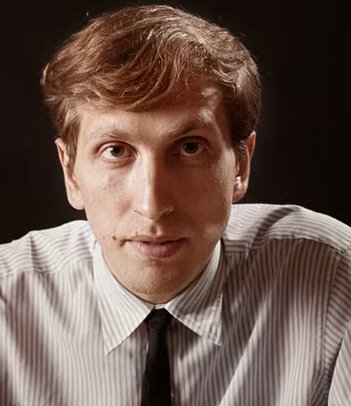
Balanced across every aspect of the position and precise in all phases. Central control first, then piece activity, then the tactics that follow from both.
How the calibration is computed, how the cards are read and weighed, and where the margins lie: that took years to develop and is the heart of ChessGate. It stays with us. What we will say is this: every move a personality plays traces back to evidence from the games it was built from, and the same evidence is what makes Petrosian defend, Nezhmetdinov attack and Capablanca simplify.
Your move.
The personality waits on your own machine, offline, for as long as you like.
Every personality comes as its own installer for Windows. It runs on your machine, with no server, no account and no connection to ChessGate.
The installer puts the engine into your own user profile. It can be removed like any program through the Windows settings.
If CZUBATRONIC 2400 is installed, the installer registers the personality as a saved engine itself. At the next start it is in the console's engine list.
Every personality is a UCI engine. Linea Chess uses external UCI engines in matches and round-robin tournaments, and any other UCI chess interface can load it too.
No subscription, no sign-in, no internet connection. The personality plays for as long as your machine runs.
Every update of the version you bought is included.
If you have a question, a person in Rangsdorf answers, usually within 48 hours.
E-Mail: [email protected]
49 personalities, from the Romantics to the moderns. Individually, in packs or as the complete collection.