




What you can do with it
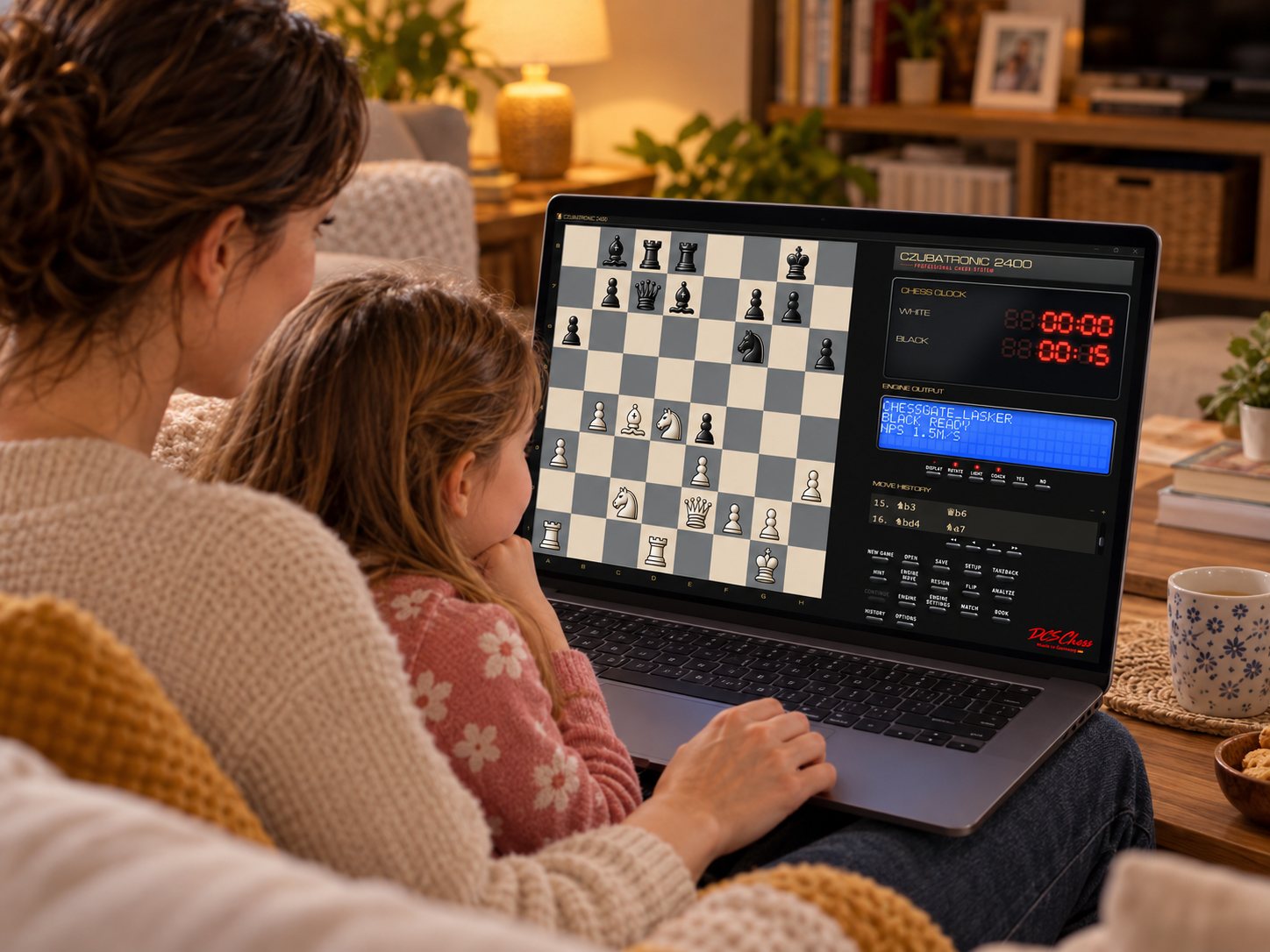
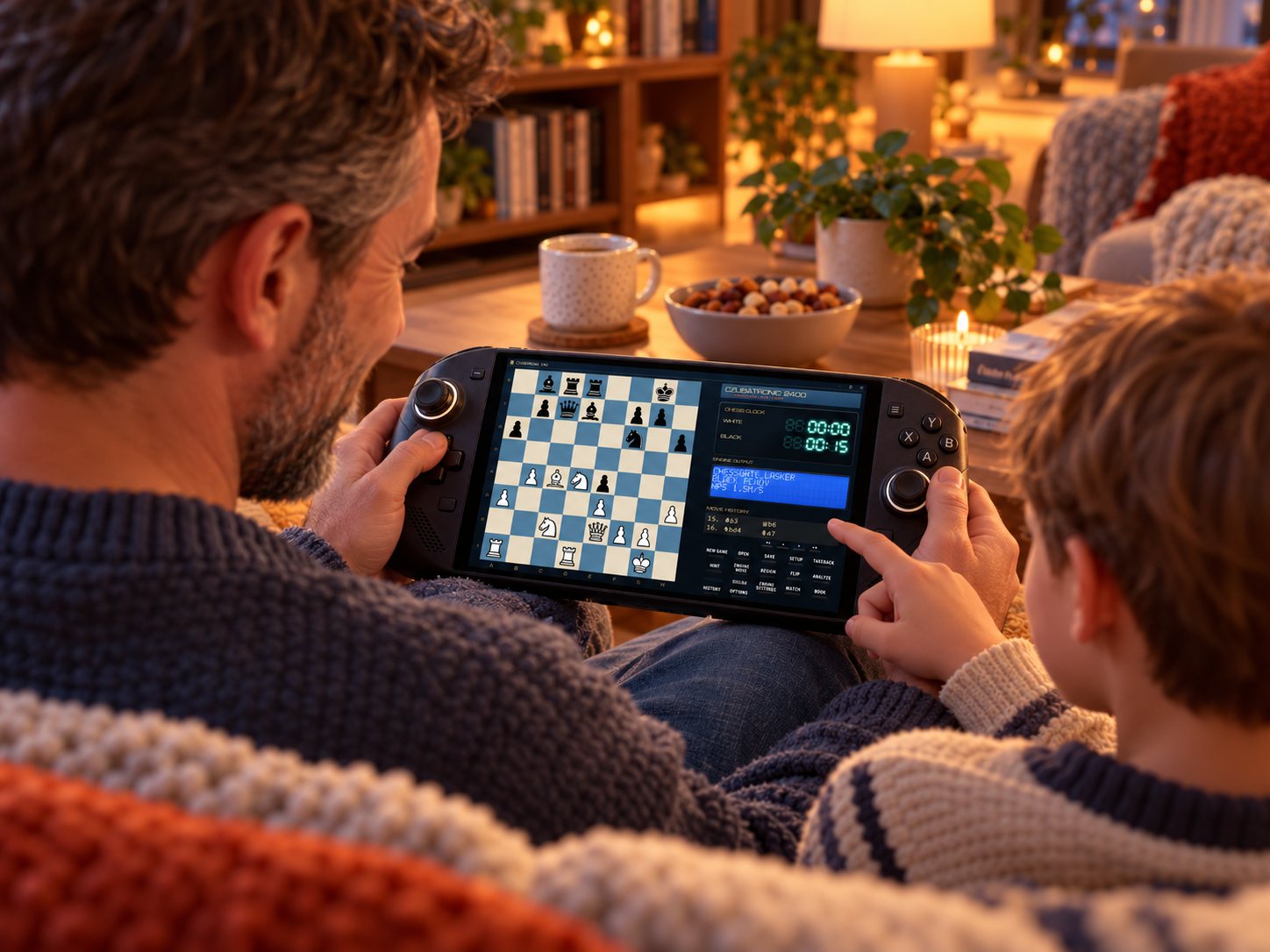
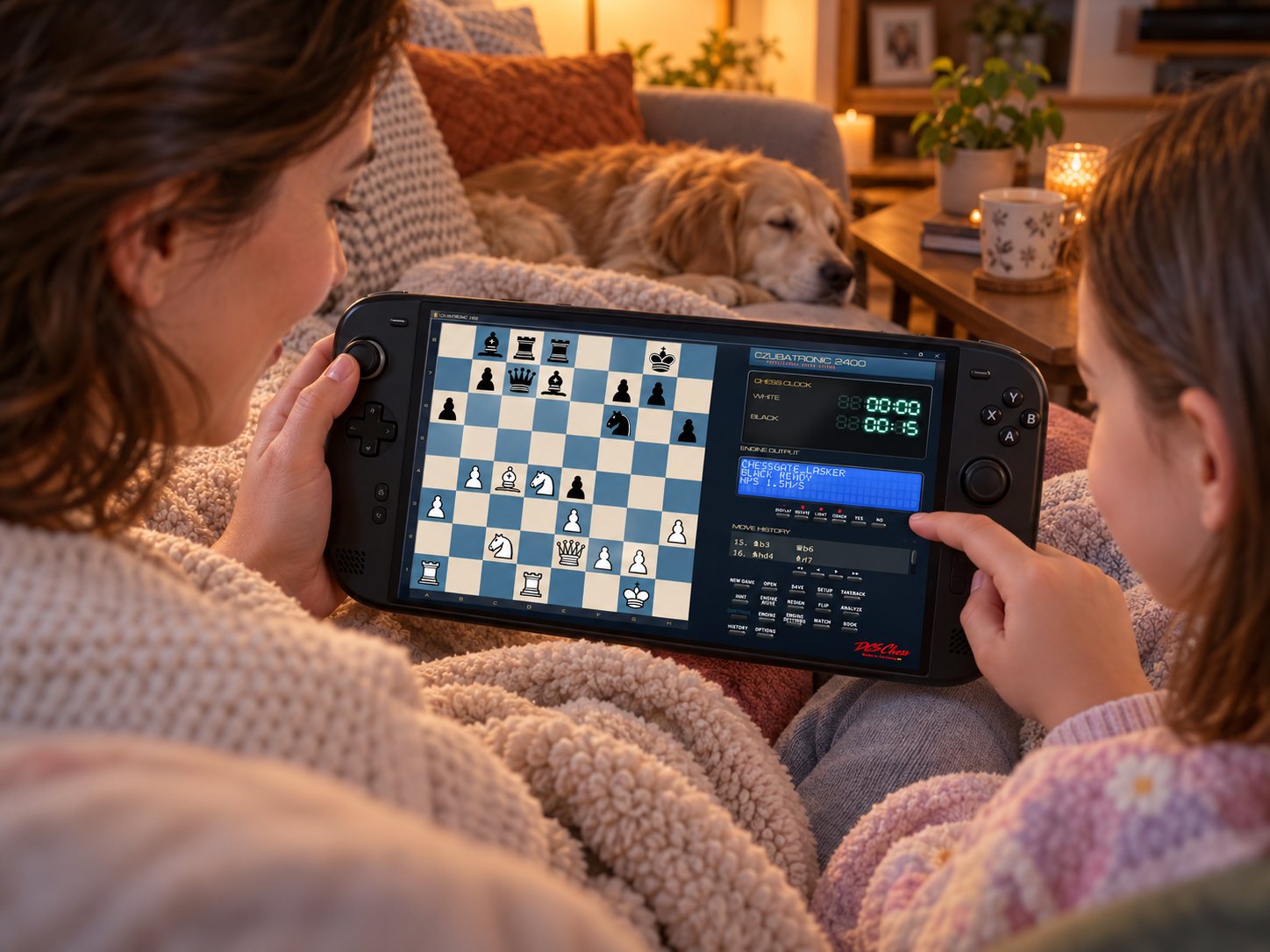
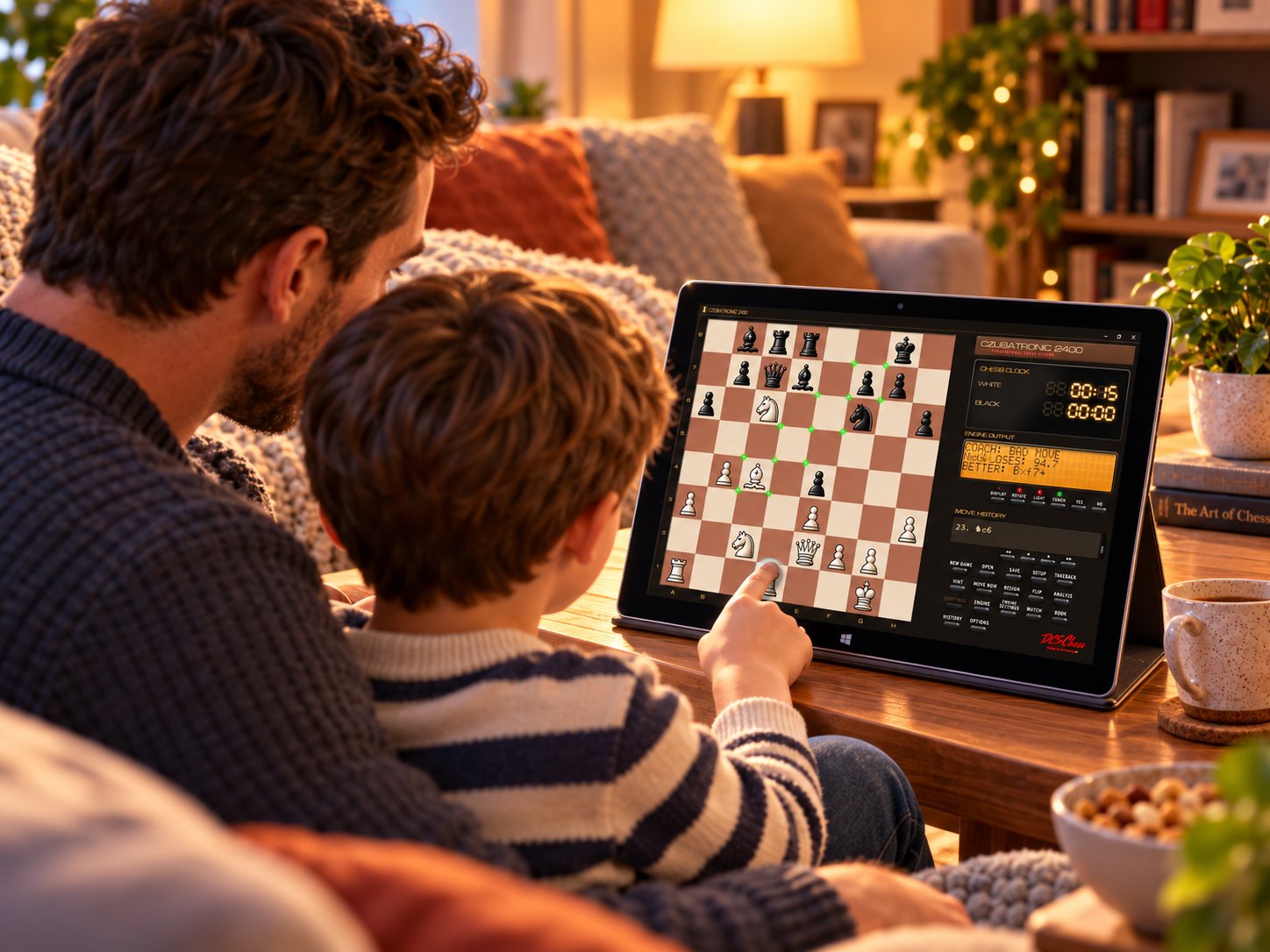
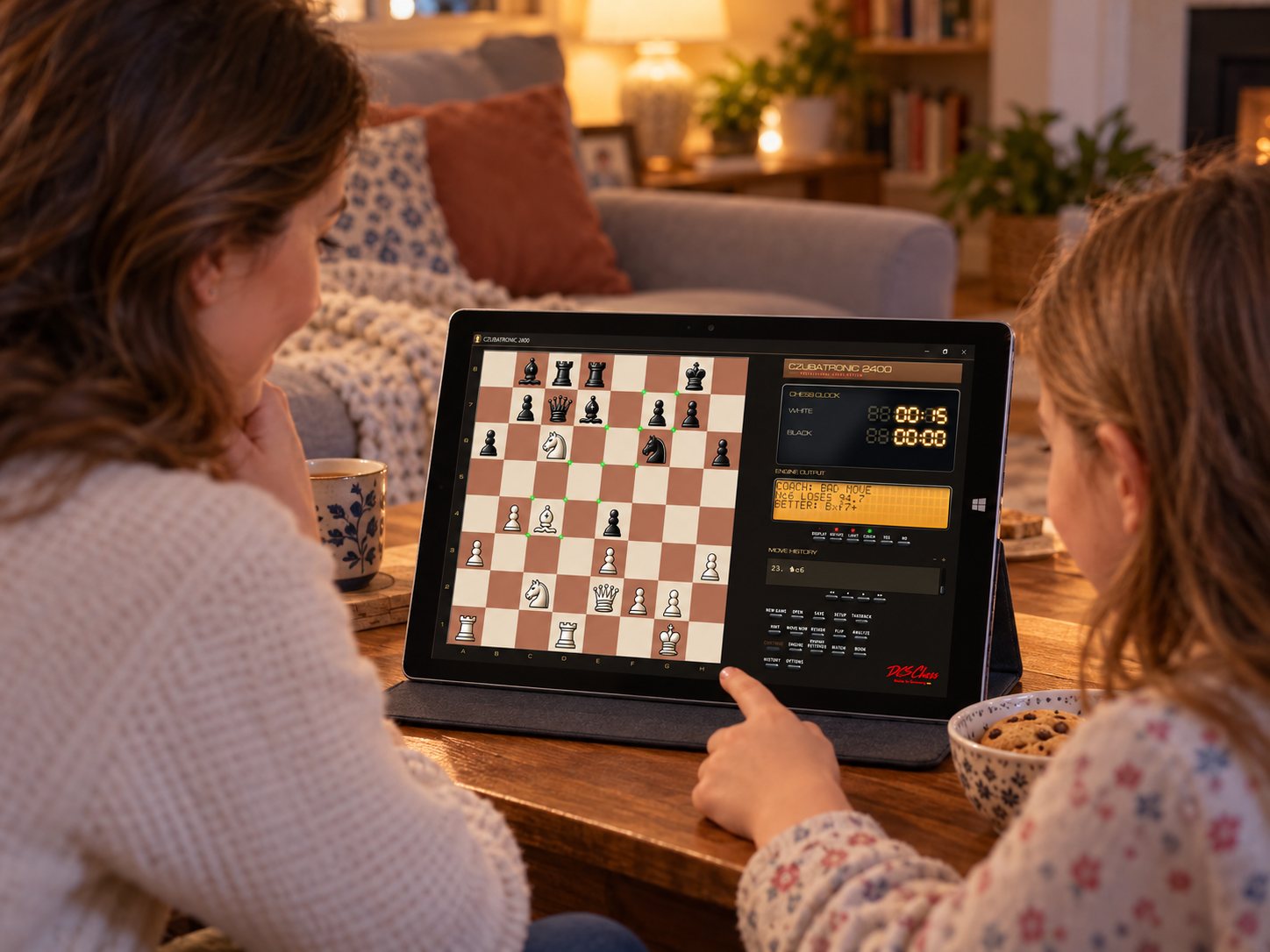
8 screens, in the order you meet them: sit down, play, let two engines fight it out, set up a position, and make the console your own. Click a screen to see it full size.
Sit down at the console
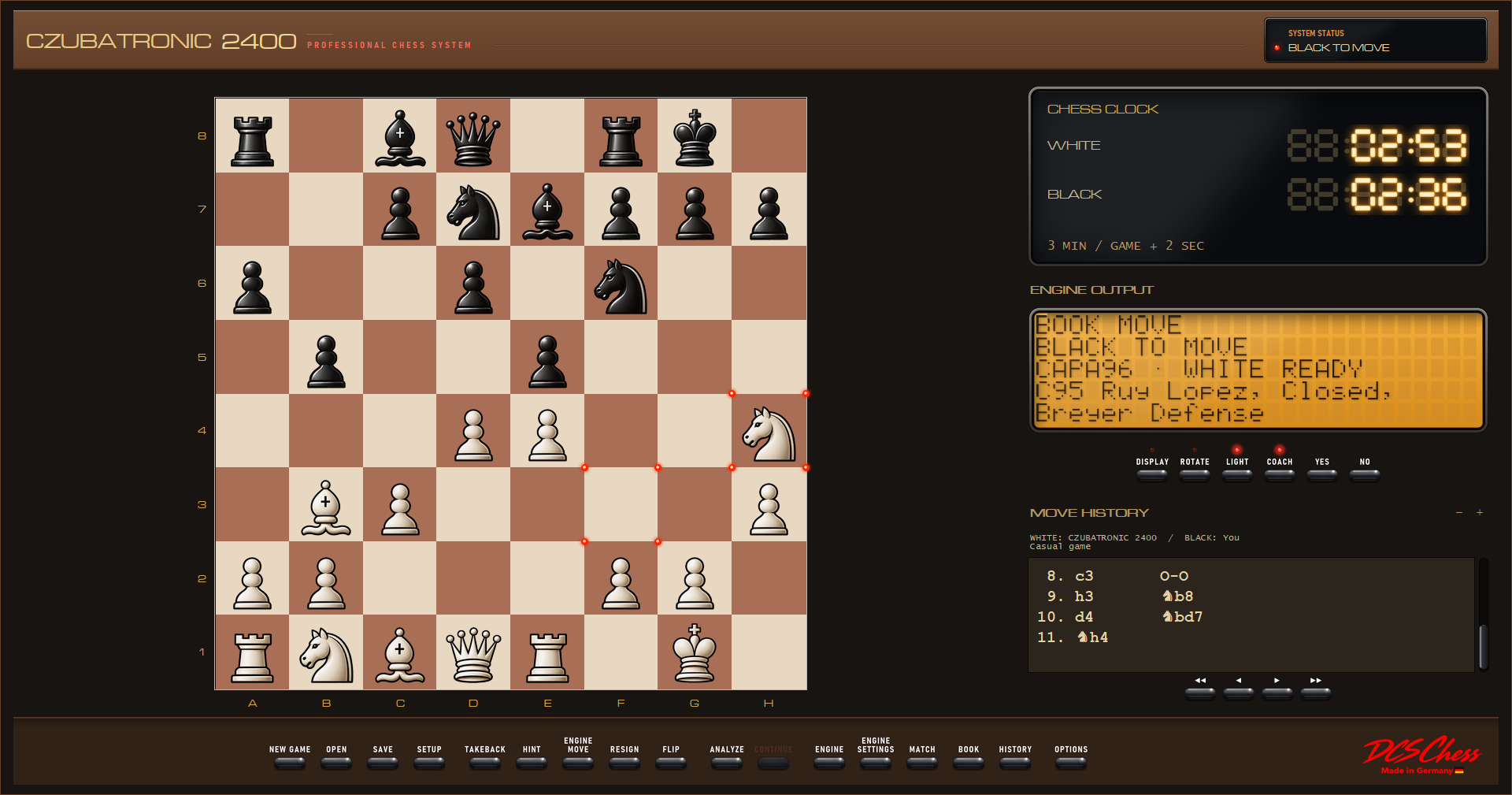
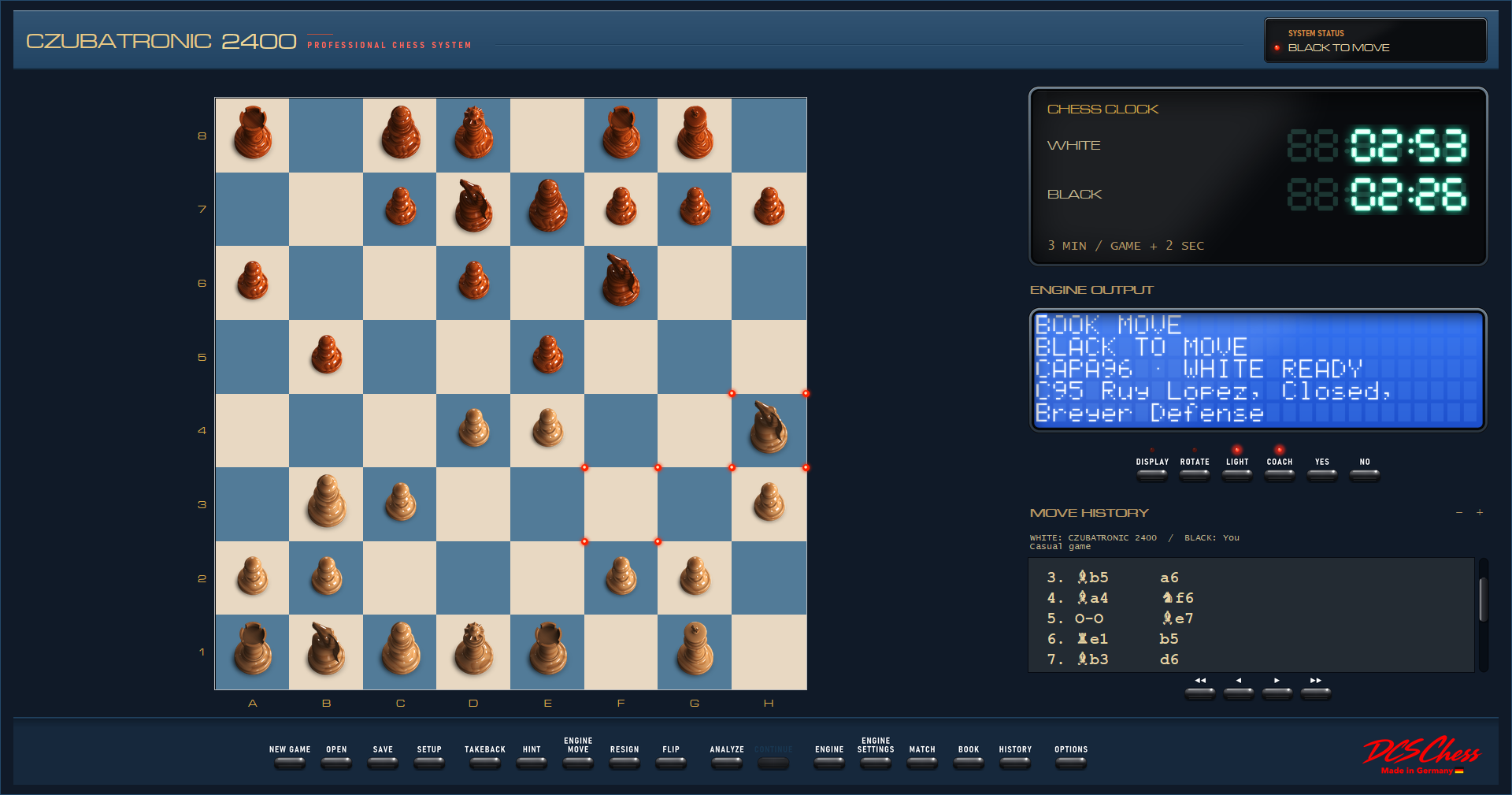
A Breyer Ruy Lopez against Capa, the clock running, the engine's eleventh move just played and lit on the board. Walnut fascia, chess clock, engine display, move history: the dedicated machine, on your screen.
The display names the opening
The status display has just named the opening: C95 Ruy Lopez, Breyer Defence. While the machine thinks it shows depth, nodes, speed and evaluation, and tells you whether the move came from the book.
Let the engines fight
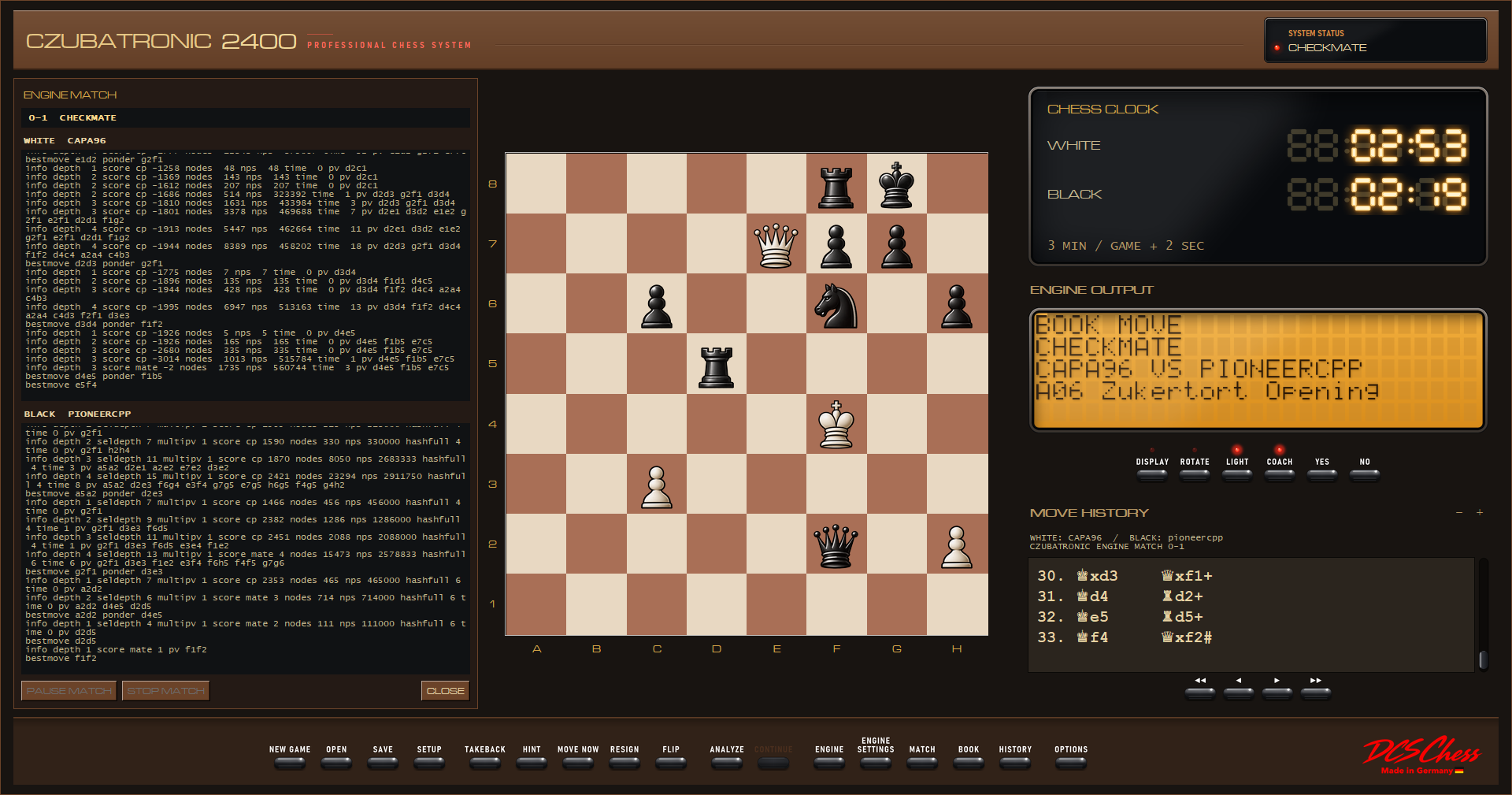
Capa versus Pioneer at fixed depth 4, both engines' search output side by side in the match panel, the final checkmate on the board. Pick two engines, one condition, and watch.
Set up any position
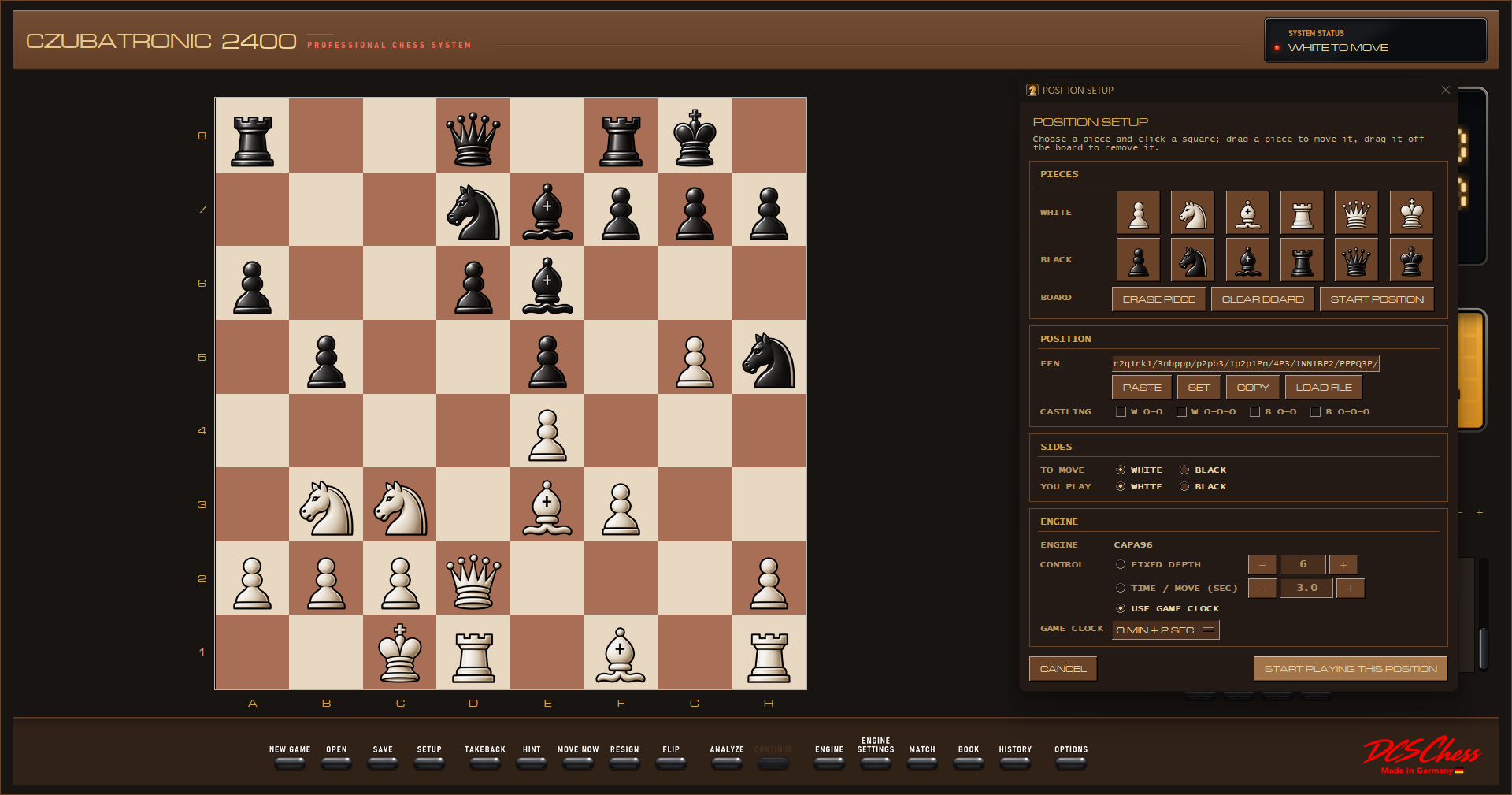
The setup palette: pieces, side to move, which side you play, the engine control and the clock, then START PLAYING THIS POSITION. Positions are validated, and the engine moves at once if the first move is its own.
Four schemes, four piece sets
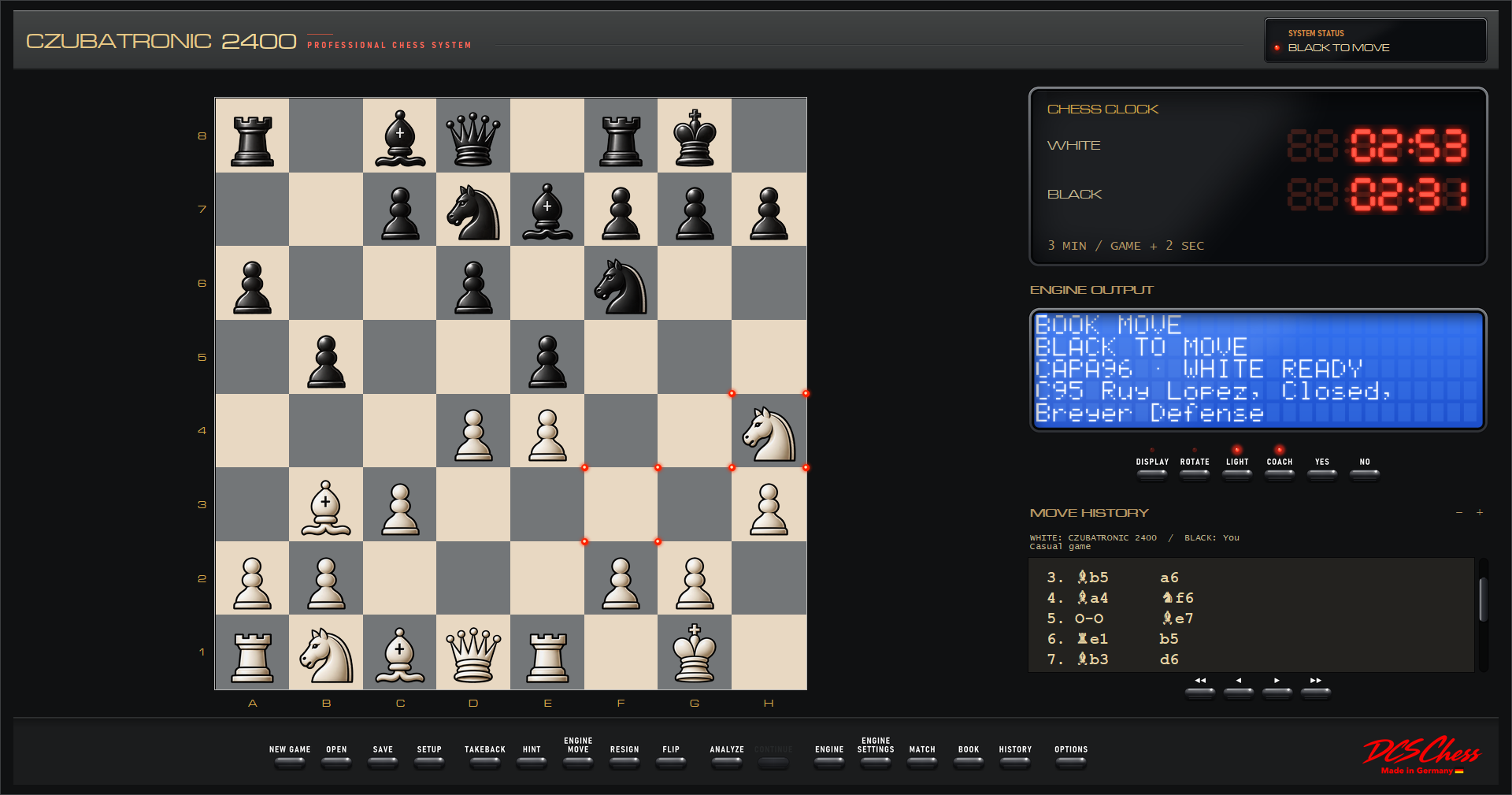
Blue, with the wooden Staunton set. Walnut is the original; Blue, Green and Graphite turn the same console into an electronic instrument, a hardware-green panel or dark ABS plastic with amber displays.
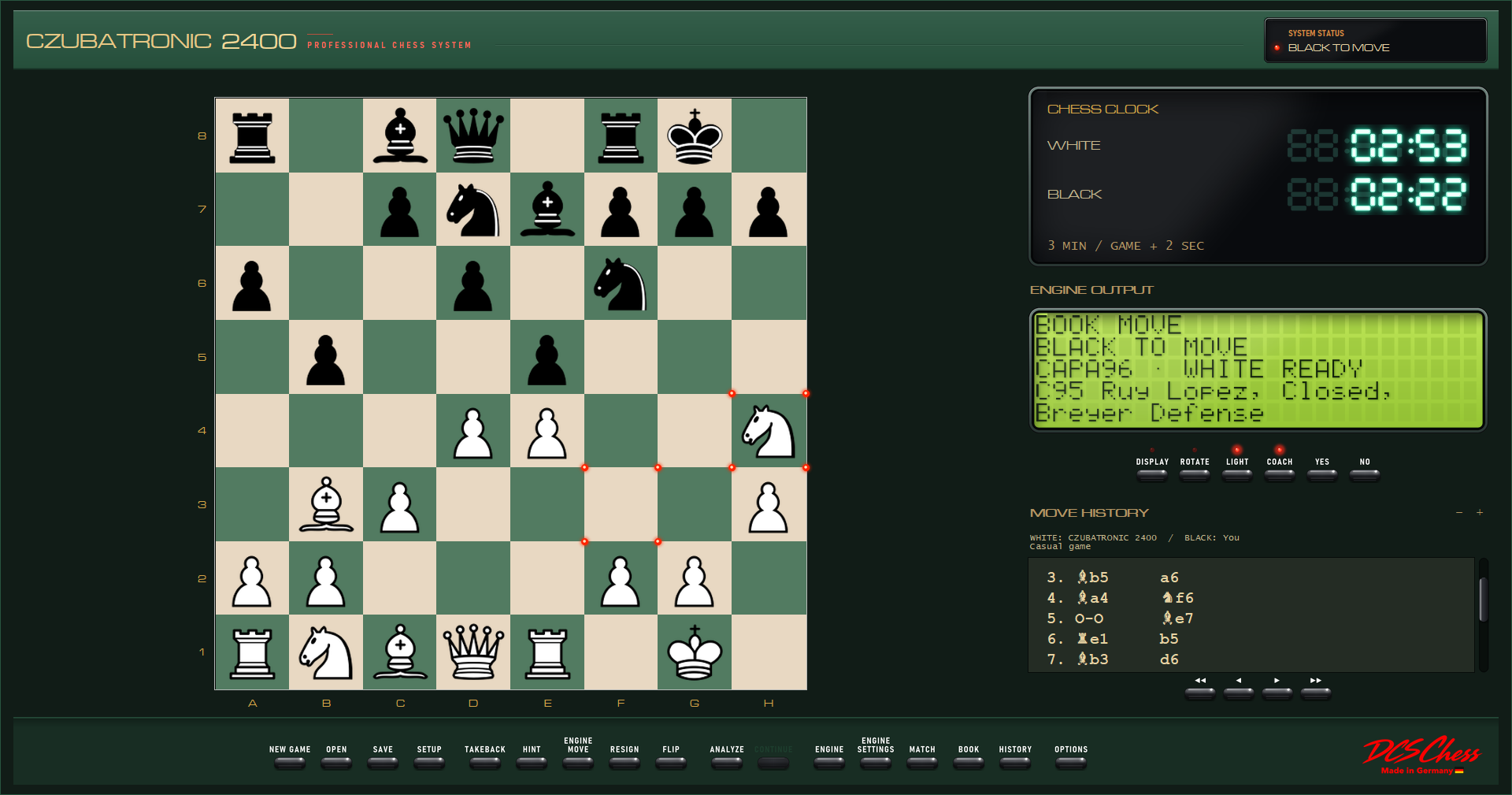
Green, with the original 2D set
The pieces come as the current CZUBATRONIC set, the original 2D production set, and two wooden Staunton sets. The window sizes itself to its content and stays readable at any display scaling.
The console's look and manners, in one place
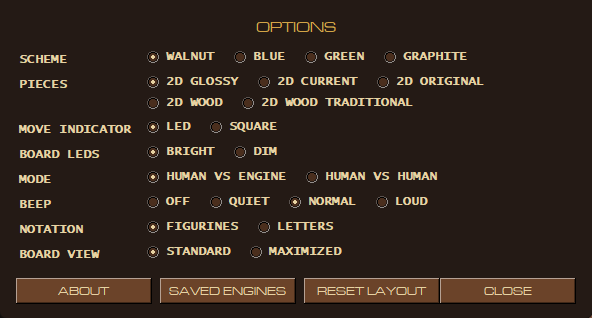
OPTIONS: scheme, pieces, move indicator, the brightness of the board LEDs, mode, beep, notation and board view.
A life in computer chess
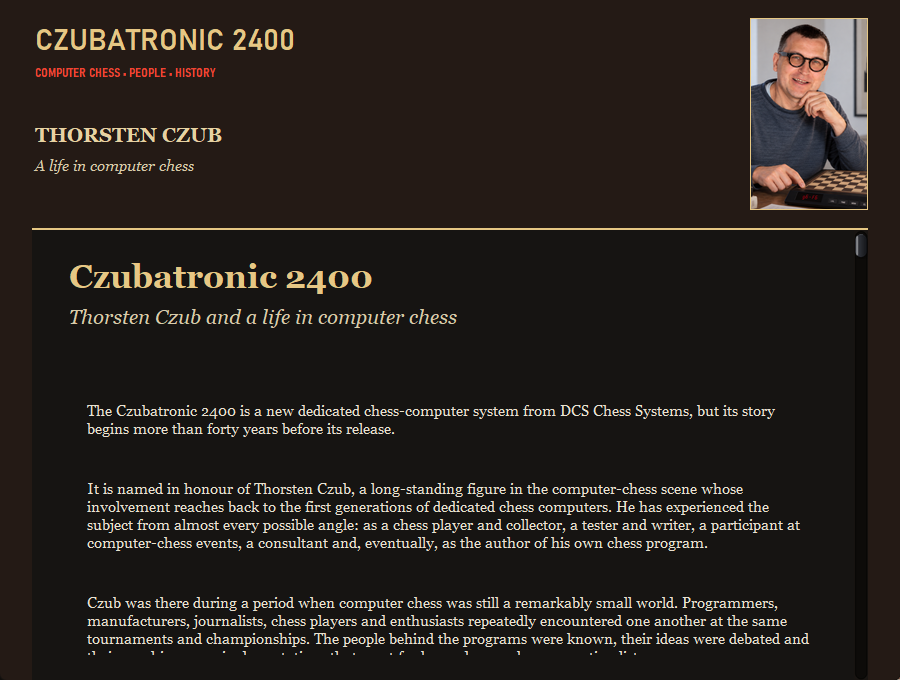
The interview reader inside the console: Thorsten Czub, from a black-and-red machine that could not spot an illegal move to Cologne 1986 and a program of his own. The engine you play against was written by someone who was in the room.